
Ceramics are divided into industrial ceramics and specialty ceramics.
Special ceramics, also known as “advanced ceramics”, “precision ceramics”, and “high-performance ceramics”, refer to ceramics with special mechanical, physical, or chemical properties. Special ceramics are prepared based on inorganic non-metallic materials, mixed with other compounds in specific proportions, and processed through molding and sintering. According to different applications, special ceramics can be divided into structural ceramics and functional ceramics.
Structural ceramics possess characteristics such as high strength, high hardness, high temperature resistance, corrosion resistance, and oxidation resistance, making them suitable for harsh environments or engineering applications. Their application fields include semiconductor equipment, wear-resistant machinery, defense and military industries, aerospace, and more.
Common structural ceramic materials include silicon carbide, alumina, silicon nitride, etc. Among them, silicon carbide materials are notable for their extremely high elastic modulus, thermal conductivity, and low thermal expansion coefficient, making them less prone to bending stress deformation and thermal strain. Additionally, they exhibit excellent polishability, allowing them to be machined into superior mirror surfaces. As a high-performance structural ceramic and high-temperature material, silicon carbide ceramics have found increasing applications in fields such as nuclear power, wind power, lithium batteries, semiconductors, and photovoltaics.
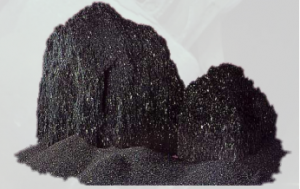
Silicon Carbide